
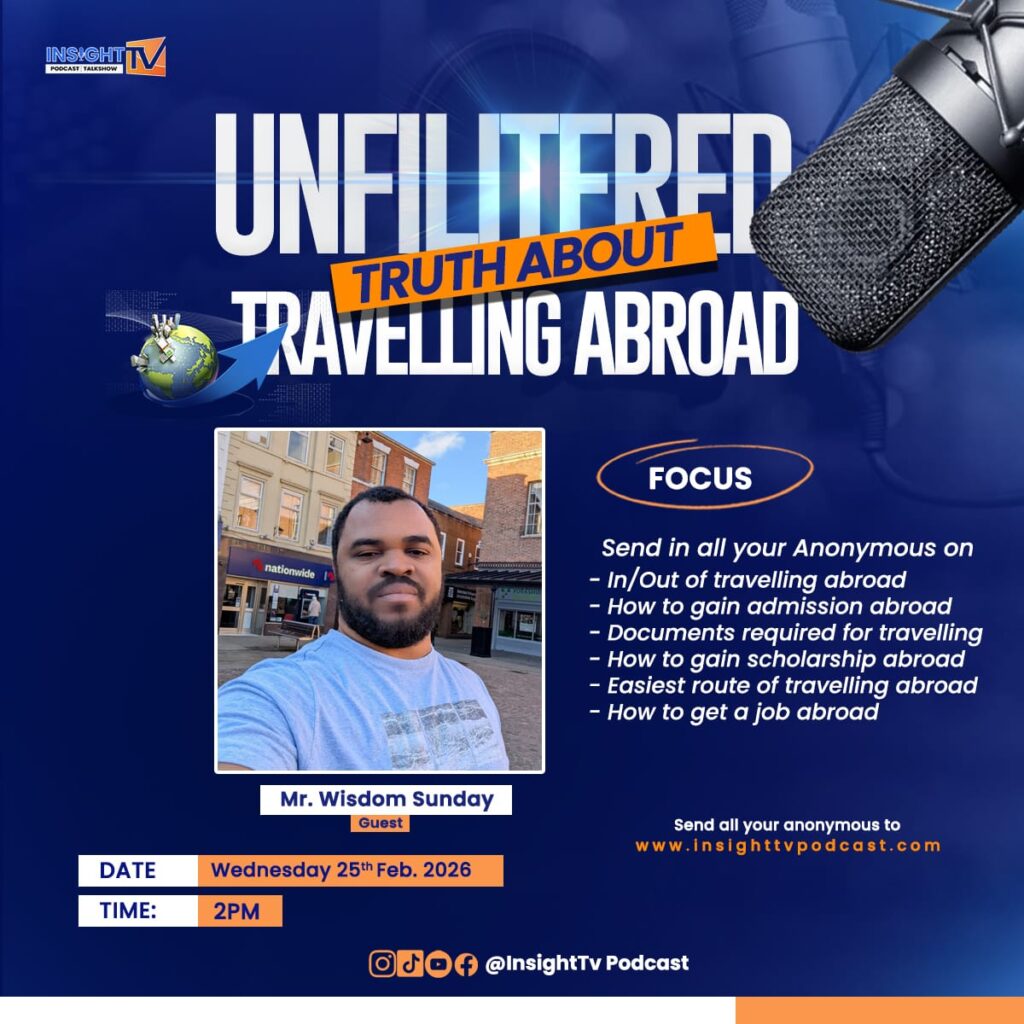
Travelling abroad sounds exciting — new opportunities, better education, career growth, and global exposure. But beyond the social media highlights, there’s one area many people underestimate: documentation.
If your documents are not complete, accurate, and properly authenticated, your travel plans can stop immediately. Let’s break down the real requirements for the UK and Europe, and what you need to prepare.
1. Core Documents Required to Travel Abroad
Whether you’re travelling for study, work, or relocation, these are the basic documents almost every country will require:
-
Valid international passport
-
Admission letter (for students)
-
Employment offer letter (for workers)
-
Proof of funds / bank statements
-
Academic certificates and transcripts
-
English language test results (IELTS or equivalent, if required)
-
Tuberculosis (TB) test certificate (for some countries)
-
Police clearance certificate
-
Birth certificate
-
Visa application forms and supporting documents
Now let’s look at how this differs between the UK and Europe.
United Kingdom: Structured and Straightforward
The United Kingdom has one of the most structured and transparent visa systems. If your documents meet the requirements, the process is relatively predictable.
Key Requirements for the UK
For students (e.g., under the Student Visa route), you typically need:
-
Confirmation of Acceptance for Studies (CAS) from a licensed sponsor
-
Proof of funds covering tuition and living costs
-
Valid passport
-
TB test certificate (if applying from certain countries)
-
Academic qualifications used to obtain admission
For workers, you’ll need:
-
Certificate of Sponsorship (CoS)
-
Job offer from a licensed sponsor
-
Proof of salary meeting visa threshold
-
English language proof
Authentication in the UK
Here’s the important part:
The UK generally does not require heavy legalization or embassy authentication of academic documents in most study visa cases. As long as your institution accepts your documents and UKVI requirements are met, the process is relatively simple.
That’s one reason many applicants describe the UK process as more straightforward compared to parts of Europe.
However, “easy” does not mean careless. Financial documentation errors and inconsistencies remain one of the biggest reasons for visa refusals.
Europe: More Bureaucracy, More Authentication
Europe is different because it consists of multiple countries, each with its own immigration rules. Countries like Germany, France, Italy, and Spain often require additional document validation steps.
Legalisation and Authentication
Many European countries require:
-
Notarisation of academic certificates
-
Legalisation at the Ministry of Education
-
Authentication at the Ministry of Foreign Affairs
-
Embassy legalisation
-
Certified translations (if documents are not in the required language)
Some countries also require an Apostille certification, depending on agreements between nations.
This means your document process may follow this chain:
Certificate → Notary → Ministry → Foreign Affairs → Embassy → Translation
It’s longer, more technical, and can take weeks or even months if not handled properly.
Financial Proof: A Major Difference
In the UK, financial proof is typically shown through:
-
Bank statements (28-day rule applies)
-
Official financial sponsorship letters
In many European countries, especially Germany, students may be required to open a blocked account, where a fixed amount of money is deposited before visa approval.
That’s a significant planning difference.
The Unfiltered Truth
-
Documentation mistakes delay dreams.
-
Europe often requires more legalisation steps than the UK.
-
Financial documentation is where most applicants fail.
-
Starting early is not optional — it’s necessary.
-
“I’ll sort it later” is the most expensive mindset in international travel.
Travelling abroad is achievable. But preparation separates approved visas from rejected ones.
Final Advice
If you are planning to travel to the UK or any European country:
-
Start gathering documents early
-
Confirm exact visa requirements on the official immigration website
-
Ensure names, dates, and details match across all documents
-
Prepare financially before applying
-
Seek professional guidance if you’re unsure
International travel rewards those who are prepared — not those who rush.
Contact Us today to begin your journey to studying in the UK with confidence.